Laboratory Furniture Maintenance Guide: Fume Hood and Laboratory Workbenches Cleaning and Color Selection Tips
Laboratory furniture is an indispensable part of any laboratory. Equipment such as fume hoods, laboratory workbenches, and chemical storage cabinets not only impact experimental efficiency but also affect the safety of laboratory personnel.
This article will share practical maintenance tips for fume hoods and laboratory benches, while also introducing several popular furniture color schemes. These insights will help you maximize the value of your laboratory furniture.

I. Ventilation Hood Cleaning and Usage Guidelines
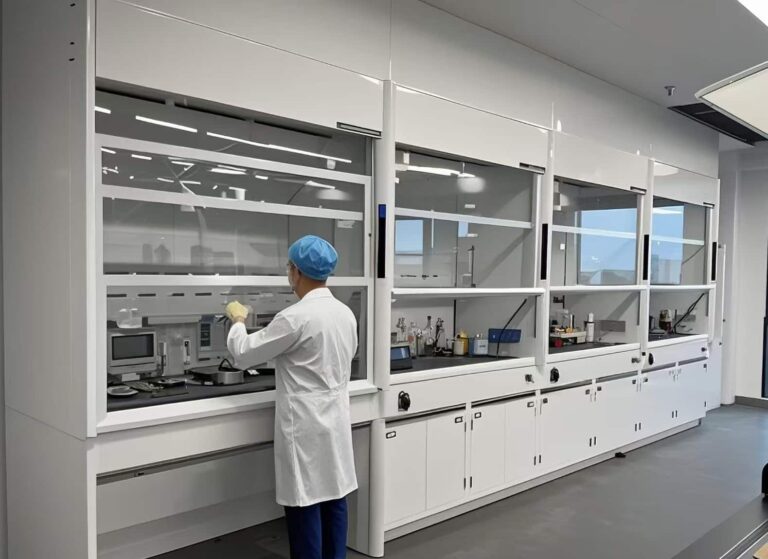
Ventilation hoods are critical equipment for handling hazardous substances in laboratories. Proper use and regular cleaning ensure they remain in optimal working condition.
• Placement of experimental apparatus is crucial
If experiments generate hazardous substances, position apparatus at least 150 millimeters away from the hood's working opening. This effectively prevents the escape of harmful materials.
• Do not obstruct the exhaust vents
Experimental apparatus must not obstruct the exhaust vents at the rear of the fume hood. Maintaining unimpeded airflow is essential for safety.
• Do Not Immediately Shut Off the Fan After Use
After completing experiments, allow the fan to continue running for 3 to 5 minutes. This ensures residual hazardous gases are fully expelled.
• Fume Hoods Are Not Storage Cabinets
Never use fume hoods as storage cabinets. Stacking miscellaneous items impedes airflow and reduces exhaust efficiency.
• Maintain Internal Cleanliness and Sealing
Regularly clean interior surfaces to preserve smoothness and airtight integrity. Report any damage for immediate repair.
• Conduct Regular Ventilation System Inspections
Ventilators, ductwork, and associated components require periodic maintenance. This prevents potential failures and ensures safe operation.
• Conduct Performance Testing Periodically
It is recommended to periodically measure the airflow velocity and performance of the fume hood. This ensures it consistently operates within its design parameters.
• Monitor Internal Temperature
When using high-power electric furnaces, place a heat-resistant pad underneath. Avoid prolonged high-temperature operation to prevent compromising the fume hood's lifespan.
II. Cleaning and Maintenance of Laboratory Countertops
Maintenance methods vary significantly depending on the laboratory countertop material. Common materials include phenolic resin panels and epoxy resin panels.
Phenolic Resin Countertop Maintenance
Phenolic resin panels are a common countertop material, durable yet requiring proper care.
• Avoid high-temperature environments
Do not expose chemical-resistant panels to temperatures exceeding 135°C (273°F) for extended periods.
• Keep Away from Open Flames and Sharp Objects
Avoid direct contact with open flames, molten metals, or direct sunlight. Do not use the surface as a cutting board.
• Use Alcohol Lamps with Caution
Flames from alcohol or gas lamps can damage the surface. Always use a tripod when in use.
• Clean the Surface Properly
Wipe with warm water, acetone, or a mild detergent. Avoid cleaners containing abrasives or strong acids. For stubborn stains, use a chlorine bleach solution followed by thorough rinsing with clean water.

Epoxy Resin Countertop Maintenance
Epoxy resin countertops offer chemical resistance and a smooth finish, making them a common choice for modern laboratories.
• Regular Alcohol Cleaning
The most common method is to wipe the surface with 70% ethanol before and after use.
• Handling Common Stains
For surface dust, wipe with a damp cloth. For tougher stains, use household cleaners, but never abrasive cleaners or wax.
• Removing Oil Stains and Scratches
For oil stains or scratches caused by metal or rubber, wipe with a cloth dipped in naphtha or solvent.
• Regular Polishing for Luster
Clean the countertop regularly with a soft cloth or paper towel. You may also use a specialized polishing oil for cleaning and maintenance.
• Restoring Countertop Luster
To restore the countertop's original shine, wipe the surface with a cloth saturated in oil, then dry it with a clean cloth.

III. Laboratory Furniture Color Selection: 3 Popular Styles
Appropriate color schemes not only enhance the laboratory's aesthetics but also improve functionality. Below are 3 widely recognized color coordination approaches:
1. Contrasting Color Scheme
Create visual focal points with different colors while maintaining stylistic consistency. For example, pairing deep red cabinets with jet-black countertops—both dark hues—maintains overall consistency while creating a “pop” through color contrast. This scheme suits modern settings seeking distinctive yet understated labs.
2. High-Contrast Color Scheme
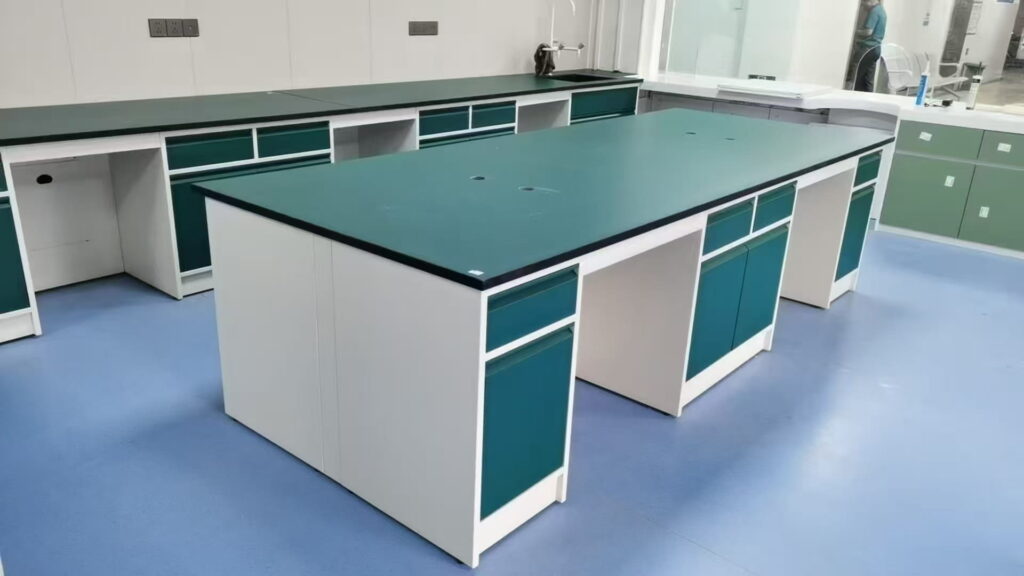
To create a sleek, contemporary lab atmosphere, employ bold color contrasts. Examples include pairing jet-black countertops with white cabinets and doors, or deep blue surfaces with gray-white cabinetry. These combinations deliver a fashionable, eye-catching effect. Textured cabinet surfaces can further enhance comfort, fostering harmony within a busy laboratory environment.

3. Unified Color Scheme
For laboratories emphasizing a dignified, formal atmosphere (such as traditional research labs), opt for a unified neutral color palette. For instance, use gray-white for all cabinetry with black countertops. This scheme offers distinct advantages: small items on the countertop become more visible, black surfaces are less prone to showing scratches, and any damage is easier to repair—making it ideal for high-traffic laboratories.
Summary: Regular Maintenance + Thoughtful Selection = Long-Lasting Use
Laboratory furniture forms the backbone of any lab. Proper cleaning and maintenance ensure fume hoods and workbenches remain durable and safe.
Simultaneously, thoughtful color choices not only enhance the aesthetic appeal of the space but also boost productivity.
We hope this guide helps you better maintain your laboratory equipment. If you're planning or upgrading your lab, visit labworkbenchs.com to explore professional products and design recommendations.


Comments
Post a Comment