Innovative Applications and Future Prospects of Controlled Environment Agriculture in Education and Research
Against the backdrop of global climate change, population growth, and limited land resources, Controlled Environment Agriculture (CEA) is emerging as a key technology for sustainable agricultural development.
Through facilities such as greenhouses, vertical farms, and plant factories, CEA precisely controls light, temperature, humidity, carbon dioxide levels, and nutrient supply to enable year-round, season-independent, and highly efficient crop production. This technology not only significantly boosts yields, conserves water resources, and reduces pesticide use but also demonstrates immense potential in education and research.
This article explores innovative applications of CEA in education and research, examining how it cultivates the next generation of agricultural talent, drives technological innovation, and contributes to sustainable development.
Basic Concepts and Advantages of Controlled Environment Agriculture (CEA)
Controlled Environment Agriculture refers to an agricultural model that utilizes technological means to optimize plant growth conditions within enclosed or semi-enclosed environments, encompassing systems such as hydroponics, aeroponics, and aquaponics. Compared to traditional open-field agriculture, the advantages of CEA are evident:
- Resource Efficiency: Water usage can be reduced by over 90%, while land utilization increases severalfold.
- Environmental Independence: Production remains stable regardless of weather, season, or pest/disease outbreaks.
- Enhanced Nutritional Value: Precise control yields crops richer in nutrients.
- Environmental Sustainability: Minimizes fertilizer and pesticide runoff while reducing carbon footprint.
These characteristics make CEA particularly suitable for urbanized areas and resource-constrained environments, while also establishing its foundation for educational and research applications.

Innovative Applications of CEA in Education
Traditional agricultural education is often confined to fieldwork, constrained by weather and seasonal limitations. The introduction of CEA has revolutionized this landscape, extending classrooms into controlled indoor environments and enabling students to gain more systematic and safer hands-on experiences.
At the school level, many K-12 institutions have integrated hydroponics and aquaponics systems into STEM (Science, Technology, Engineering, Mathematics) curricula. Students learn biology, environmental science, and data analysis by monitoring sensor data, adjusting nutrient solutions, and observing plant growth. For instance, some U.S. schools utilize containerized vertical farms where students personally cultivate vegetables for school cafeterias. This approach not only fosters sustainability awareness but also promotes interdisciplinary learning—such as programming automated irrigation systems.
At the university level, CEA has become central to specialized curricula. Institutions like the University of California, Davis (UC Davis) and Wilmington College have invested in educational greenhouses and vertical farming facilities, offering courses ranging from basic horticulture to advanced automation control. Students engage in hands-on learning covering LED lighting optimization, climate control, and crop breeding. These facilities also serve as platforms for vocational training, addressing the CEA industry's demand for skilled workers—a sector projected to generate significant job opportunities over the next decade.

The Transformative Role of CEA in Research
CEA's greatest value lies in its controllability: researchers can isolate single variables—such as light spectrum or CO₂ concentration—while maintaining other conditions constant. This significantly enhances experimental precision and reproducibility.
Numerous universities worldwide have established dedicated CEA research centers. For example:
- Ohio State University's Controlled Environment Agriculture Research Complex (CEARC) focuses on indoor food production research.
- The University of Arizona's Controlled Environment Agriculture Center (CEAC) explores vertical farming technologies.
- Cornell University's GLASE Consortium integrates LED lighting and systems engineering to advance energy-efficient greenhouse development.
These centers are tackling critical CEA challenges such as energy consumption, crop breeding, and microbiome optimization. Simultaneously, CEA supports interdisciplinary research—including space agriculture experiments with NASA—to develop technologies for future Mars base food production.
In China, institutions like the Chinese Academy of Agricultural Sciences are advancing smart facility agriculture research, integrating IoT and AI to achieve precise environmental control.

Key Equipment Required for Establishing a CEA Education and Research Laboratory
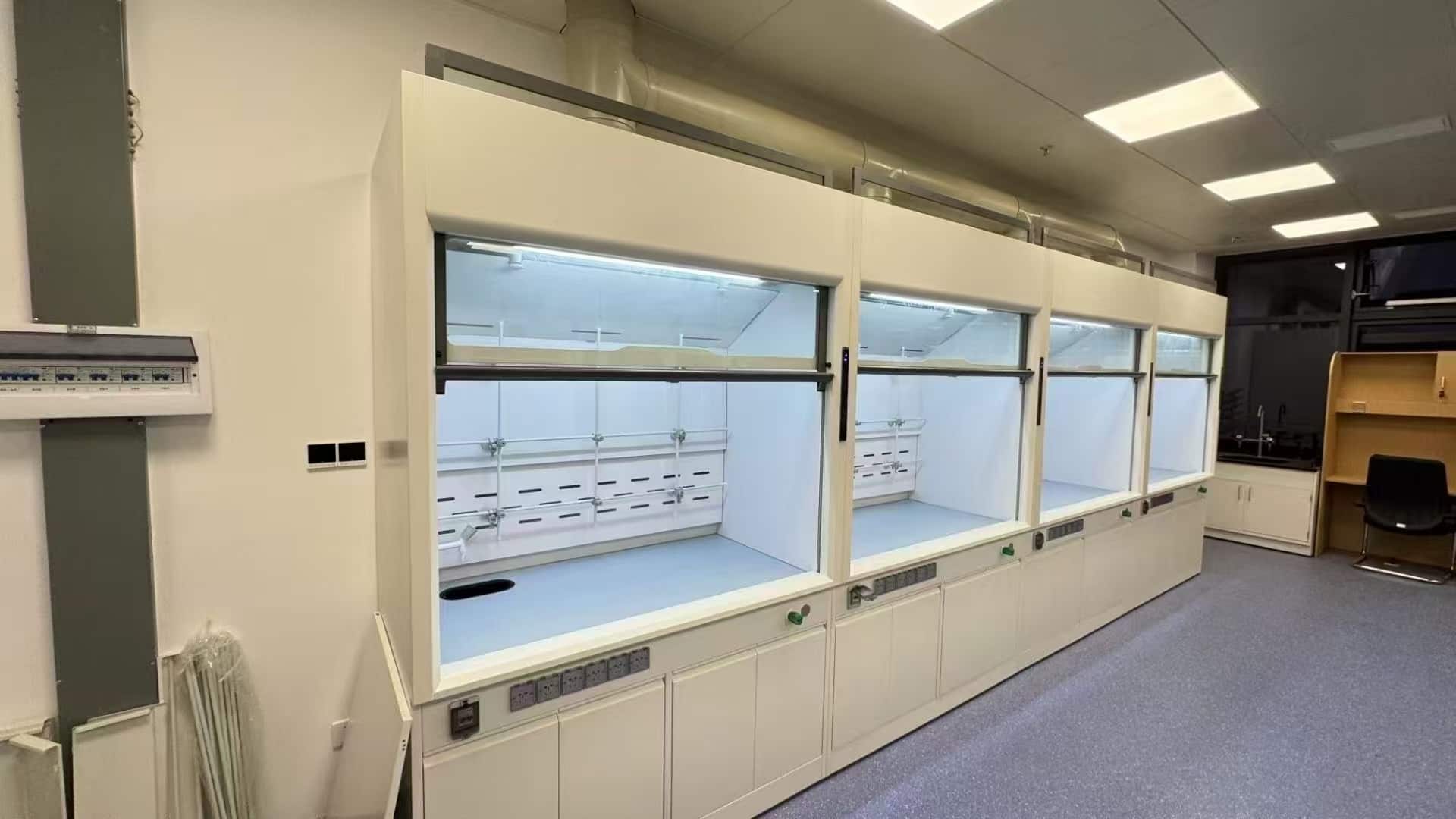
To effectively conduct CEA education and research activities, in addition to core growth systems (such as hydroponic racks, LED grow lights, and climate control equipment), specialized laboratory furniture and work platforms are essential. These furnishings must be corrosion-resistant, chemical-resistant, easy to clean, and modular to support daily operations including nutrient solution preparation, sample analysis, data logging, and instrument placement.
Recommended configurations include:
- Corrosion-resistant laboratory workbenches: Featuring epoxy resin or stainless steel countertops to withstand nutrient solutions and chemical reagents.
- Laboratory benches with cabinets and shelves: Facilitating storage of reagents, tools, and sensors while providing ample workspace.
- Laboratory sinks and faucets: Integrated PP material sinks supporting precise cleaning and waste liquid disposal.
- Fume hoods: Ensuring safety during volatile substance handling.
Professional manufacturers like labworkbenchs.com offer customized laboratory bench solutions featuring C-channel/H-channel steel frame structures, modular designs, and global delivery—suitable for CEA projects in educational institutions and research laboratories.
Rethinking the Future: CEA-Driven Education and Research Ecosystems
Looking ahead, CEA will evolve from an auxiliary tool into a mainstream platform for education and research. We envision:
- Virtual-Reality Integration: Using digital twin technology to simulate CEA systems, enabling remote experimentation for students.
- Community and Global Collaboration: School CEA farms producing food for local communities while sharing data via online platforms to foster international research collaboration.
- Policy and Investment Support: Governments and corporations increase funding to establish more university-industry partnerships, cultivating specialized talent.
- Sustainable Development Education: CEA will serve as a vehicle for disseminating the United Nations Sustainable Development Goals (SDGs), teaching students how to address food security and climate change.


Through these innovations, CEA will not only reshape agricultural production but also nurture a generation equipped with technological literacy, environmental awareness, and innovative capabilities. They will become the backbone driving agricultural modernization.
The potential of Controlled Environment Agriculture extends far beyond efficient production—it is redefining the boundaries of education and research. In this rapidly changing world, embracing CEA means embracing a sustainable future. Let us begin in schools and laboratories to collectively build a greener, smarter agricultural era.


Comments
Post a Comment