Full Guide to Fire-resistant Safety Cabinets: Compliance, Color Coding & Operation Rules
Chemicals are core raw materials across manufacturing, energy, pharmaceutical, petrochemical, and laboratory industries. But improper handling or storage creates catastrophic risks: fire, explosion, toxic leakage, and chemical burns.
Safe chemical storage is a non-negotiable workplace safety priority. Fire-resistant safety cabinets act as critical explosion-proof barriers, isolating hazards and stopping accidents before they escalate.
This guide covers standardized operation rules, color-coded classification systems, core cabinet construction specs, and global compliance standards (OSHA & NFPA 30) for industrial and lab teams.
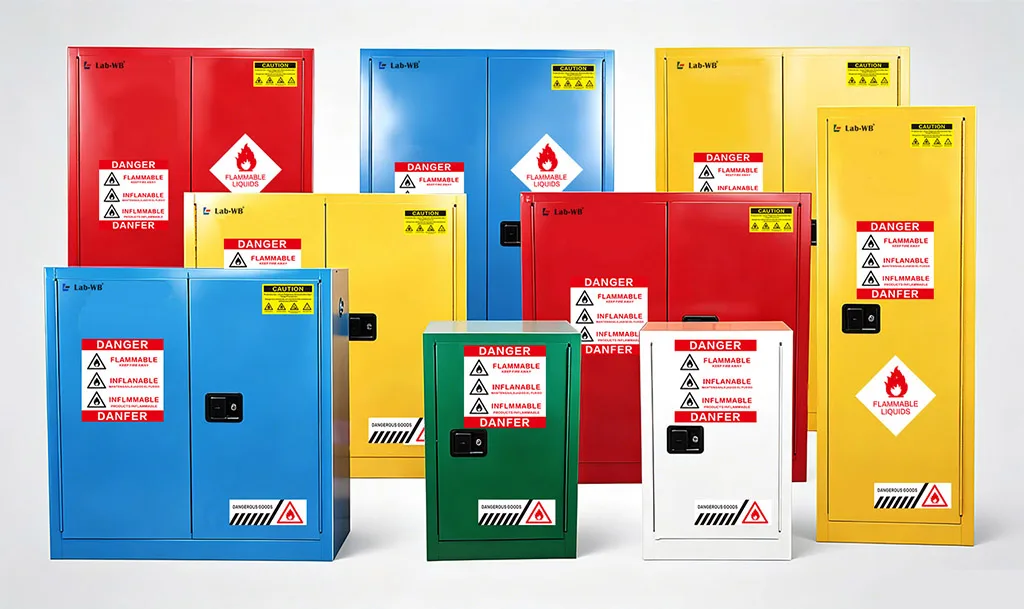
1. Mandatory Operation & Management Rules for Safety Cabinets
Fire-resistant safety cabinets are deployed in labs, factories, chemical warehouses, and logistics facilities storing flammable, corrosive, and toxic substances. Follow these 8 universal operational rules to stay compliant:
1.1 Cabinet Placement & Environment
Position cabinets on flat, level ground. Clear all weeds, paper, rags, and other combustibles within 2 meters around the unit.
Clean the surrounding floor daily to eliminate chemical spills or debris buildup.
Strictly control temperature and humidity in storage zones: keep spaces dry, ventilated, shaded, and fully separated from heat sources, power panels, and open flames.
Perform regular environmental checks; adjust ventilation or cooling immediately if temperature/humidity drifts out of safe ranges.
1.2 Site Signage & SDS Documentation
Post clear hazard warning signs at every chemical storage area.
Keep complete Safety Data Sheets (SDS) posted near each cabinet for all stored chemicals.
All staff must master chemical properties, storage zones, and emergency response procedures before handling hazardous materials.
1.3 Load & Layer Storage Limits
Never exceed the weight load capacity of cabinet shelves.
Store heavy, large containers on lower shelves; place light, small bottles on upper tiers to avoid tipping and spills.
1.4 Strict Ignition Source Control
No open flame work (cutting, welding), lighters, or spark-generating tools within cabinet proximity.
Smoking, discarded lit matches, or burning waste are fully banned in all chemical storage areas.
Do not damage cabinet locks or force cabinet doors closed. Protect cabinet surfaces from scratches, impact, and corrosive liquid splashes to preserve the fire-resistant coating.
1.5 Chemical Compatibility Rules
Never store strong corrosive liquids inside standard flammable safety cabinets.
Separate incompatible chemicals (acids vs. alkalis, oxidizers vs. reducing agents) into independent, dedicated cabinets.
Do not mix chemicals with unknown chemical properties in the same storage unit.
1.6 Safe Loading & Unloading
Handle hazardous chemicals gently during transport and placement. Avoid dropping, dragging, rolling, colliding, or tipping containers.
Use spark-free tools for all chemical transfer operations to eliminate static ignition risks.
1.7 Fire Protection Management
Equip every chemical storage zone with adequate, rated fire extinguishers and spill response kits.
Assign dedicated staff to inspect, maintain, restock, and replace fire equipment on schedule.
Never block, cover, or repurpose fire suppression gear.
2. Global Compliance Standard: OSHA & NFPA 30
All fire-resistant safety cabinets featured in this guide fully comply with:
OSHA 29 CFR 1910.106 (U.S. Occupational Safety and Health Administration regulations for flammable liquid storage)
International CE, UL, and FM certification benchmarks
These standards regulate cabinet fire resistance, ventilation, spill containment, storage volume limits, and segregation rules for hazardous liquids.
3. Color-Coded Cabinet Classification System
Different cabinet colors mark dedicated chemical categories to avoid cross-contamination and incompatible mixing. Below is the full classification breakdown:
Yellow Cabinets: Flammable Liquids (Flashpoint <45°C)
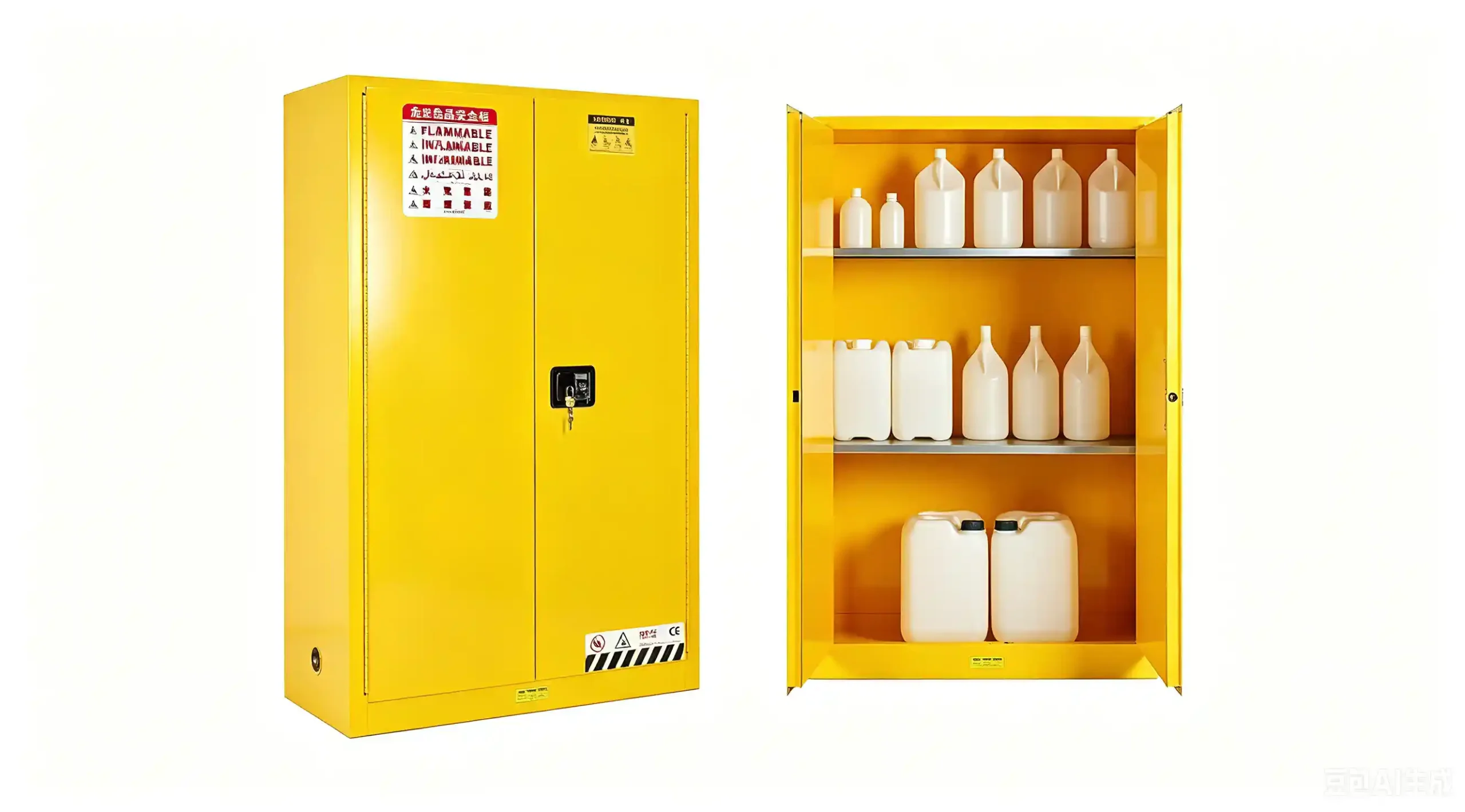
For substances with flashpoints below 45°C that ignite easily at room temperature.
Common stored chemicals: ethanol, methanol, gasoline, acetone, kerosene, paint thinner
Red Cabinets: Combustible Liquids (Flashpoint >45°C)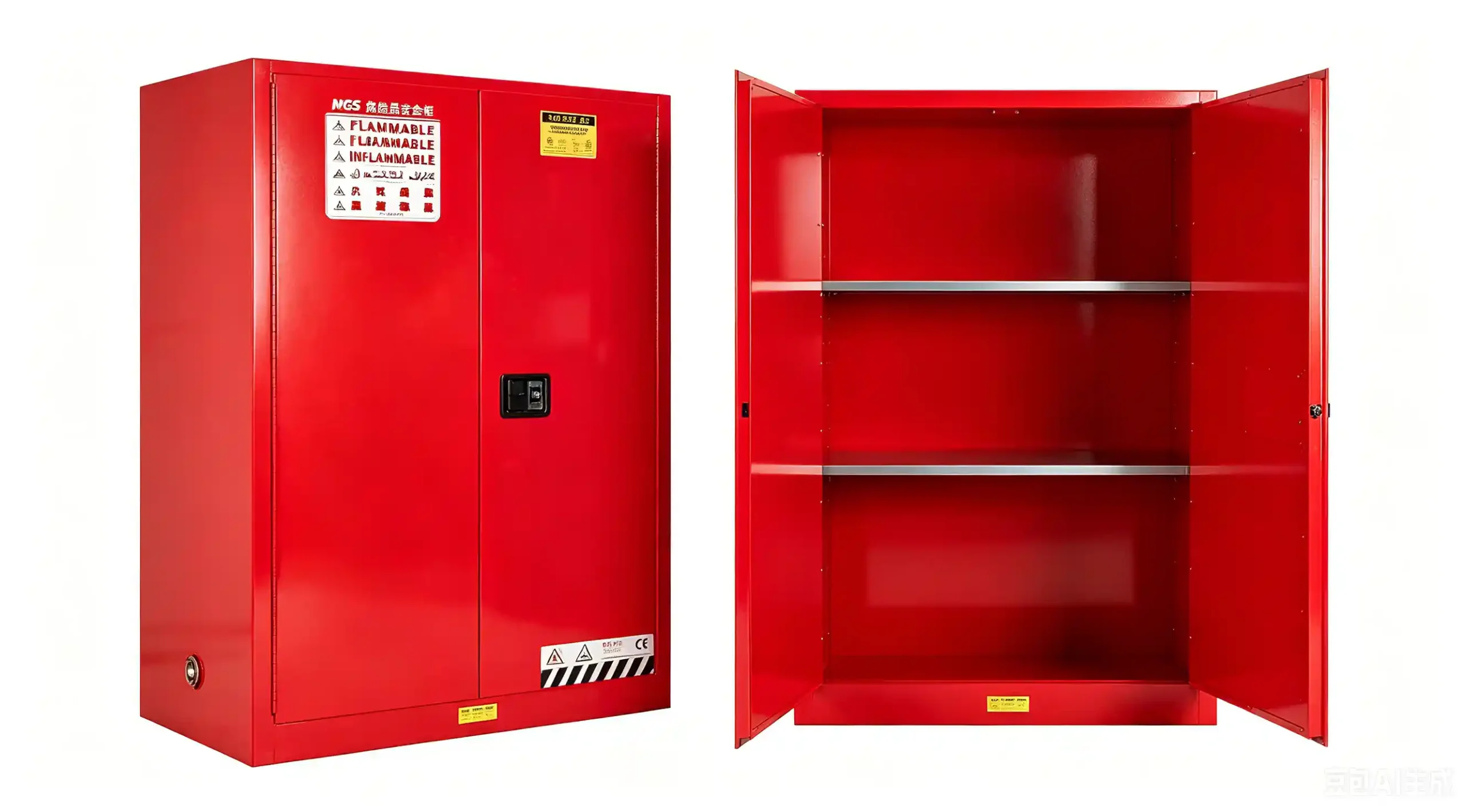
For high-flashpoint liquids that only ignite under sustained heat.
Common stored chemicals: machine oil, lubricants, formaldehyde, heavy industrial paints
Blue Cabinets: Weak Corrosive Liquids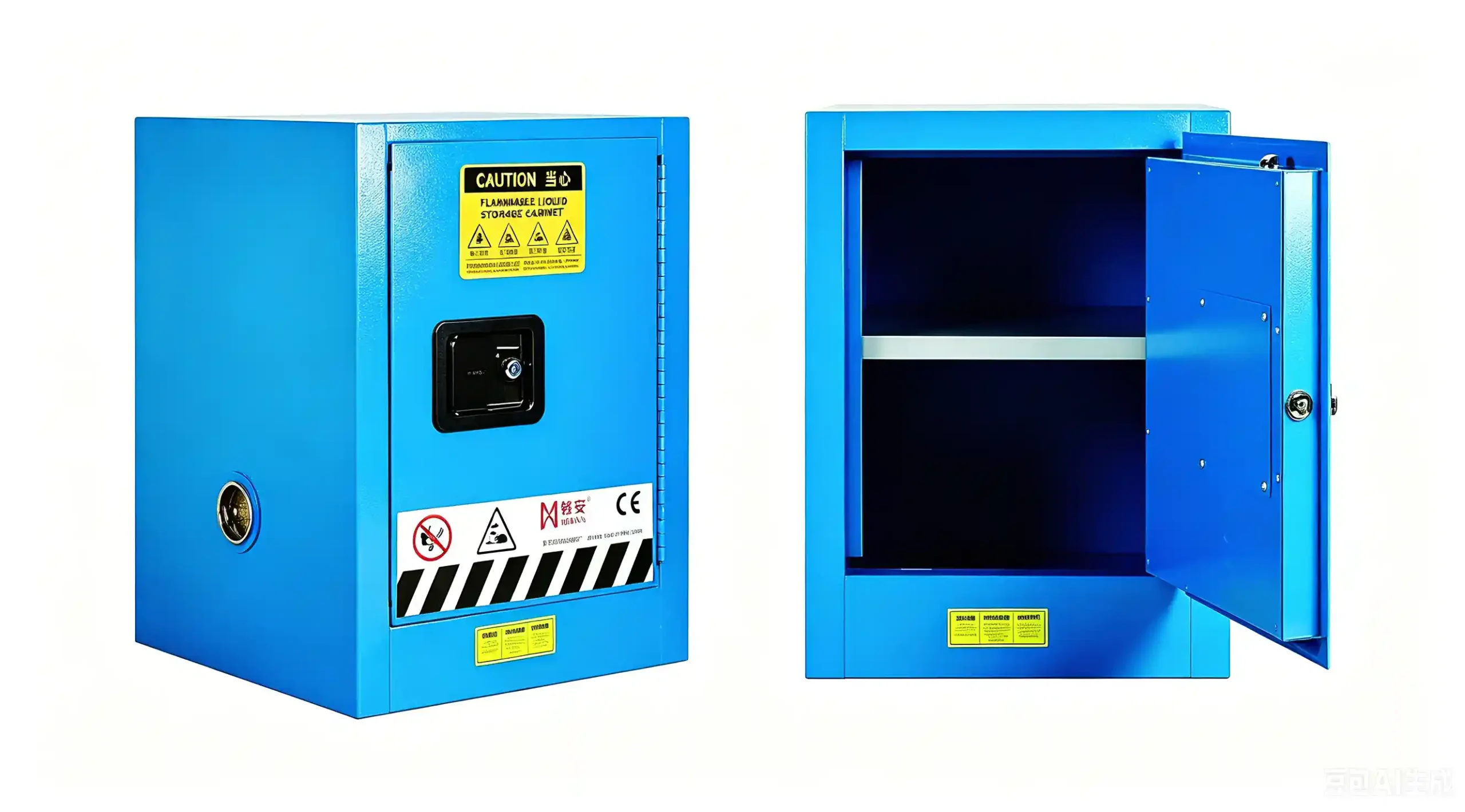
For acidic and alkaline substances that damage metal and skin tissue.
Common stored chemicals: sulfuric acid, hydrochloric acid, nitric acid, acetic acid, sodium sulfide
Gray Cabinets: Toxic Substances
For lethal, carcinogenic, or neurotoxic chemicals.
Common stored chemicals: mercury, arsenic trioxide, hydrofluoric acid, military nerve agents (Sarin, Soman)
Green Cabinets: Pesticides & Insecticides
For agricultural biocidal chemical reagents.
Common stored chemicals: cyhalothrin, imidacloprid, acetamiprid, chlorantraniliprole
4. Core Construction Features of Compliant Fire Safety Cabinets
High-performance fire-resistant cabinets meet FM, OSHA, and NFPA 30 specs with these critical design elements:
Double-layer fireproof steel plate structure
38mm insulated air gap between inner and outer steel walls for 90-minute fire resistance. Steel thickness exceeds 1.0mm with full spot welding for extended service life.3-point interlocking lock system
180° wide-opening cabinet doors fitted with dual-key locks for controlled access.Built-in spill containment sump
A 5 cm deep leak-proof tray captures accidental liquid spills and prevents cross-contamination.Dual-side ventilation ports
Fire-rated exhaust openings balance internal vapor concentration, reduce explosion risk, and support optional external vent piping.Adjustable spill-proof shelves
Shelves reposition every 6cm to adapt to different container heights.Lead-free anti-corrosion coating
Internal and external cabinet surfaces are coated with durable ceramic enamel to resist chemical erosion.Height-adjustable base feet
Four leveling feet at the cabinet bottom stabilize units on uneven floors.Standardized hazard warning labels
Clear multi-language safety markings are printed on the front of every cabinet for instant hazard identification.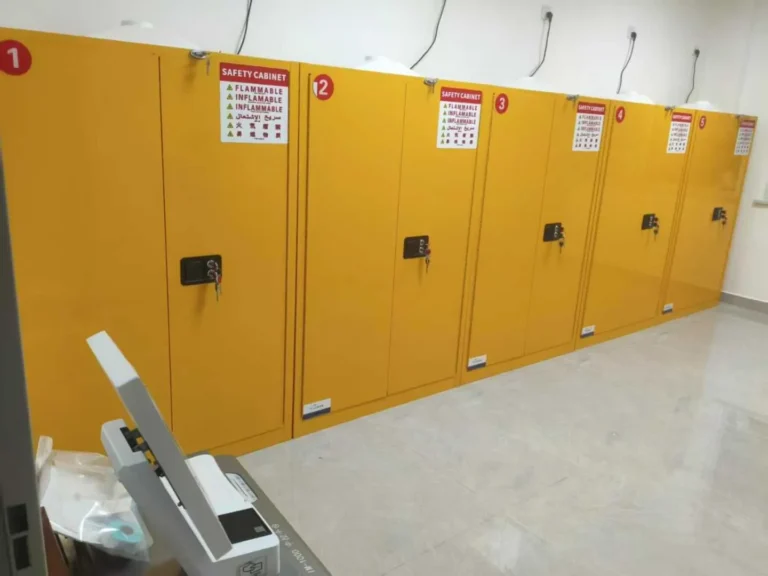
5. Final Notes & Trusted Storage Solutions from Lab-WB
Proper hazardous chemical storage is the first line of workplace fire and injury prevention. Non-compliant generic shelves or unrated lockers create severe legal and safety risks for labs, factories, and industrial facilities.
If you are upgrading lab storage systems or sourcing NFPA & OSHA compliant fire-resistant safety cabinets, Lab-WB delivers full-spectrum chemical storage solutions built for global regulatory alignment. Their product lineup covers color-coded fire safety cabinets, polypropylene corrosion-proof storage units, intelligent IoT monitoring chemical lockers, and outdoor integrated hazmat storage containers, all validated against NFPA 30 and OSHA 29 CFR 1910.106 standards.
You can review full technical specifications, spring season risk assessment guides, and fire-resistant cabinet product details at their official resource pages:
All Lab-WB cabinets pass EU CE certification, support custom sizing for lab and industrial sites, and ship within 15 business days with reinforced anti-collision packaging for global delivery. Prioritize standardized, certified storage equipment to fully protect your team and maintain regulatory audit compliance.


Comments
Post a Comment